

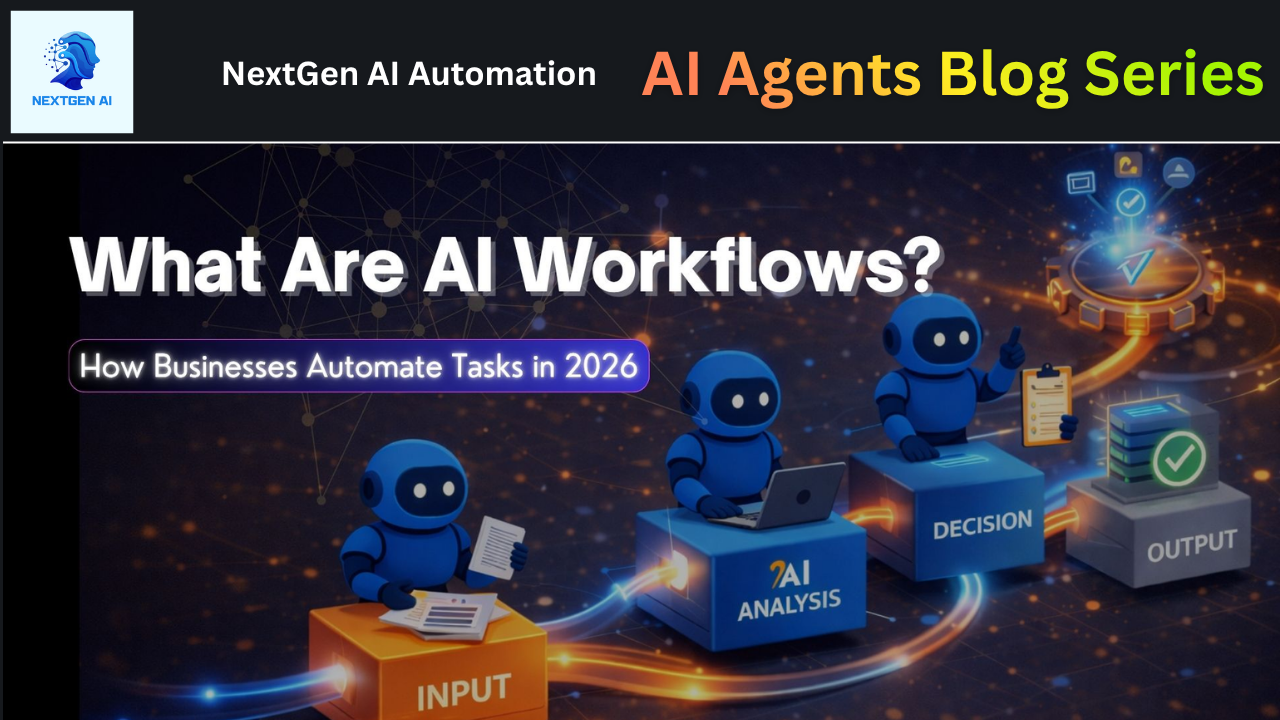
Meta Description
Learn how to automate internal workflows in small businesses using AI in 2026. Save time, reduce errors, and improve team productivity with smart automation systems.
Introduction
Running a small business is not just about customers and sales.
Behind every successful business, there are dozens of internal processes happening every day—assigning tasks, tracking progress, managing approvals, updating spreadsheets, and keeping teams aligned.
These workflows may seem small individually, but together they consume a huge amount of time.
When handled manually, internal operations often become slow and disorganized. Tasks get delayed, updates are missed, approvals take longer, and communication becomes confusing.
That’s why AI workflow automation is becoming essential for small businesses in 2026.
By automating internal workflows, businesses can reduce repetitive work, improve efficiency, and create smoother systems that help teams focus on higher-value tasks.
Why AI Internal Workflow Automation Matters
Internal workflows are the backbone of any business.
When operations run smoothly, teams work faster and make fewer mistakes. But when processes are unorganized, even simple tasks become difficult to manage.
AI workflow automation helps businesses create structured systems where tasks move automatically from one stage to another.
Instead of manually checking updates or assigning work, automation tools handle repetitive actions automatically.
Benefits include:
- Faster task completion
- Better team coordination
- Reduced manual errors
- Improved productivity
- Clear workflow tracking
- Less repetitive work
In 2026, businesses that automate internal workflows can operate more efficiently while saving both time and money.
Identify Repetitive Internal Processes
The first step in AI workflow automation is identifying repetitive tasks.
Look for processes that happen regularly and follow predictable steps.
Common examples include:
- Task assignments
- Approval requests
- Status updates
- Notifications
- Data entry
- File organization
- Team reminders
These processes are ideal for automation because they don’t require constant manual decision-making.
Once identified, you can begin building automated workflows around them.
Connect Your Business Tools
AI automation becomes much more powerful when your tools work together.
Instead of switching between multiple apps, you can connect platforms so information flows automatically.
For example:
- A new task is created
- The task is assigned automatically
- A team notification is sent
- Progress is updated in real time
This entire process can happen without manual effort.
Platforms like Make help businesses create visual automation workflows between different applications.
You can also explore the official guide here:
Automate Task Management with AI
Managing tasks manually becomes difficult as businesses grow.
AI workflow automation helps organize projects by automatically:
- Assigning tasks
- Setting deadlines
- Updating statuses
- Tracking progress
- Sending reminders
Tools like Airtable help teams manage workflows in a structured and organized way.
With automation in place, employees always know:
- What needs to be done
- Who is responsible
- When deadlines are approaching
This reduces confusion and improves accountability across teams.
Improve Team Communication
Communication is one of the most important parts of internal workflows.
Without proper communication, teams miss updates and projects slow down.
AI automation helps by sending notifications automatically whenever:
- Tasks are assigned
- Approvals are completed
- Deadlines change
- Projects move forward
Instead of manually updating everyone, the system keeps teams informed automatically.
This improves collaboration while reducing unnecessary meetings and follow-up messages.
Use AI to Simplify Internal Processes
Modern AI tools do more than connect apps.
They also help businesses simplify and optimize workflows.
For example, Notion AI can assist with:
- Organizing workflows
- Creating task summaries
- Generating process documentation
- Structuring project plans
- Managing internal knowledge
AI reduces the amount of manual planning needed and helps teams stay organized more efficiently.
This makes internal workflow automation smarter, not just faster.
Reduce Errors and Delays
Manual workflows often create problems such as:
- Forgotten tasks
- Delayed approvals
- Incorrect data entry
- Miscommunication
- Missed deadlines
AI workflow automation reduces these issues by ensuring every step happens in the correct order.
Automated systems can instantly trigger the next action once a task is completed.
This improves reliability and keeps operations moving smoothly.
For small businesses, reducing even minor delays can significantly improve productivity over time.
Common Mistake to Avoid
One of the biggest mistakes businesses make is trying to automate everything immediately.
This usually creates workflows that are too complicated to manage.
A better strategy is to start small.
Begin with one simple process, such as:
- Task assignments
- Approval workflows
- Team notifications
Once that automation works successfully, gradually expand into more advanced systems.
Small improvements often create the biggest long-term results.
How to Get Started with AI Workflow Automation
Getting started does not require advanced technical knowledge.
Start with a simple internal workflow and automate one or two steps first.
A beginner workflow could look like this:
- A form submission triggers a task
- The task is assigned automatically
- A notification is sent to the team
- Progress is tracked automatically
Once the process becomes stable, you can continue improving and expanding your automation systems.
The goal is to simplify operations—not make them more complicated.
Learn How AI Automation Fits Into Larger Systems
Internal workflow automation is only one part of business automation.
As your business grows, multiple automated systems can work together across marketing, sales, operations, and customer support.
To understand how larger automation ecosystems work, explore:
This helps businesses understand how different tools connect to create scalable automation systems.
Final Thoughts
AI internal workflow automation is no longer optional for growing businesses in 2026.
It helps teams stay organized, reduces repetitive work, improves communication, and keeps operations running smoothly.
By automating internal processes, small businesses can save time, reduce errors, and improve productivity without increasing workload.
The businesses that grow faster in 2026 will be the ones that build efficient systems behind the scenes.
And AI workflow automation is one of the best ways to make that happen.