

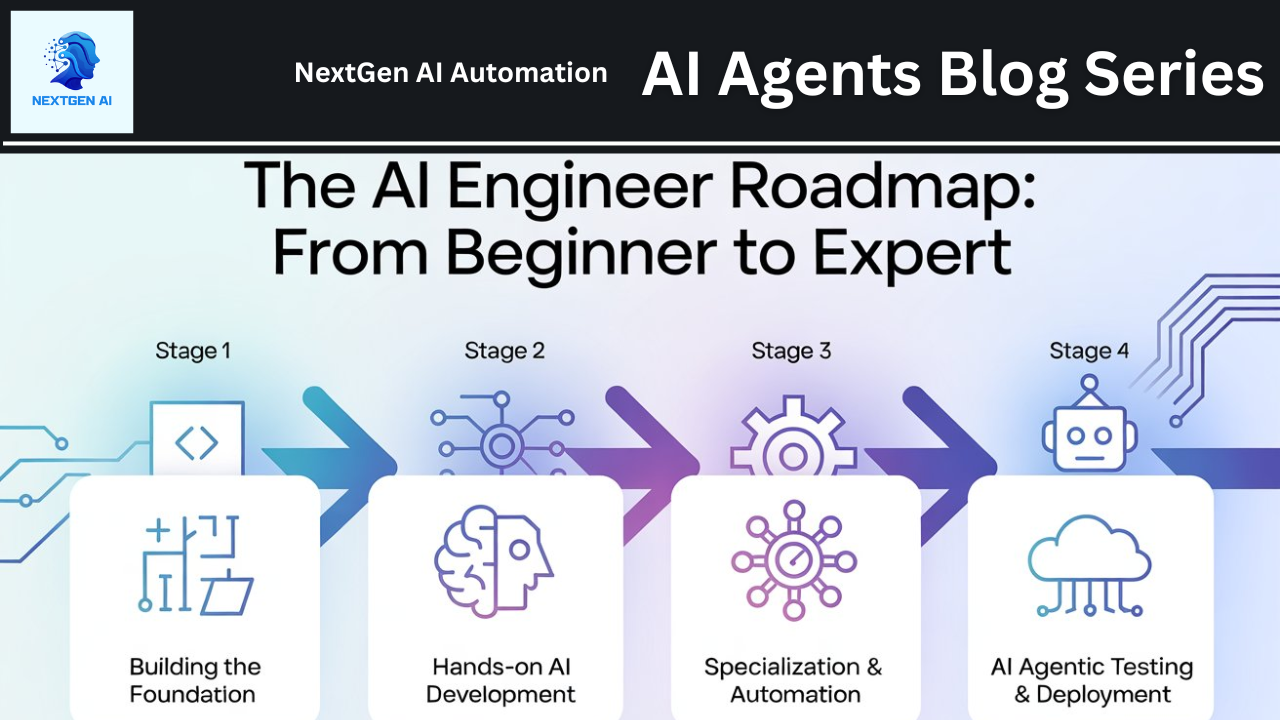
Artificial Intelligence is no longer a future concept—it has become a practical tool used across industries to improve efficiency and productivity. From automating repetitive tasks to enhancing customer experience, AI is now accessible to individuals and businesses of all sizes.
However, for beginners, the real challenge is not the availability of tools, but the lack of a clear starting point. Many people feel overwhelmed by the number of platforms, features, and technical terms. This guide provides a structured and practical AI roadmap for beginners, helping you move from basic understanding to real-world implementation.
1. Start with Practical Usage
The first step in learning AI is to use it in everyday tasks. Instead of focusing on technical theory, begin with simple applications that deliver immediate value.
You can start by:
- Writing emails or messages
- Generating ideas for content or projects
- Summarizing long documents
This hands-on approach allows you to understand how AI responds and builds confidence without requiring technical expertise. Over time, these small use cases create a strong foundation for more advanced applications.
2. Learn the Fundamentals of Prompting
Prompting is one of the most important skills in working with AI. The quality of results depends heavily on how clearly you communicate your request.
For example:
- Basic prompt: “Write a blog”
- Improved prompt: “Write a beginner-friendly blog explaining an AI roadmap in simple language with examples”
By providing context, tone, and intent, you can significantly improve the output. Consistent practice in prompting will help you achieve more accurate and useful results from AI tools.
3. Identify Relevant Use Cases
After gaining basic familiarity, the next step is identifying where AI can create the most impact in your workflow.
Common use cases include:
- Content creation and digital marketing
- Customer support and automated responses
- Lead generation and qualification
- Administrative and repetitive operations
It is important to focus on one or two areas initially. This allows you to test, refine, and measure results before expanding into other areas.
4. Build Simple AI Workflows
Once you understand where AI can help, begin connecting tasks into simple workflows. This step transforms AI from a standalone tool into a productivity system.
Examples of basic workflows:
- Automatically responding to customer inquiries
- Generating draft replies for emails or messages
- Capturing leads and sending instant follow-ups
Even a small workflow can save significant time and reduce manual effort. The goal is to simplify processes, not complicate them.
5. Leverage No-Code Tools
One of the key advantages in 2026 is the availability of no-code platforms. These tools allow beginners to build AI-powered systems without any programming knowledge.
With no-code tools, you can:
- Integrate multiple applications
- Automate repetitive tasks
- Create structured workflows visually
This accessibility enables faster adoption and makes AI practical for non-technical users.
6. Focus on Outcomes, Not Tools
A common mistake beginners make is focusing too much on tools rather than results. With new platforms emerging frequently, it is easy to get distracted.
Instead, define clear outcomes such as:
- Saving time on daily tasks
- Improving response time
- Increasing operational efficiency
Selecting tools based on your goals ensures better consistency and long-term progress.
7. Continue Learning with Reliable Resources
To deepen your understanding, it is important to learn from credible sources. Platforms like OpenAI provide valuable insights into how AI systems function and how they can be applied effectively in real-world scenarios.
Continuous learning will help you stay updated and improve your ability to use AI strategically.
Conclusion
The AI roadmap for beginners in 2026 is clear and practical: start with simple applications, develop strong prompting skills, and gradually build workflows that improve efficiency.
You do not need advanced technical knowledge to get started. By focusing on consistent application and measurable outcomes, you can quickly move from basic usage to meaningful automation.
The key is to begin with small steps, stay focused on your goals, and expand your use of AI over time.
If you want to explore how to implement AI systems in your business:
https://www.nextgenaiautomation.net/
For updates and insights, join our community:
https://chat.whatsapp.com/Exap1rUcKbwA9nXQINxdb8?mode=gi_t