

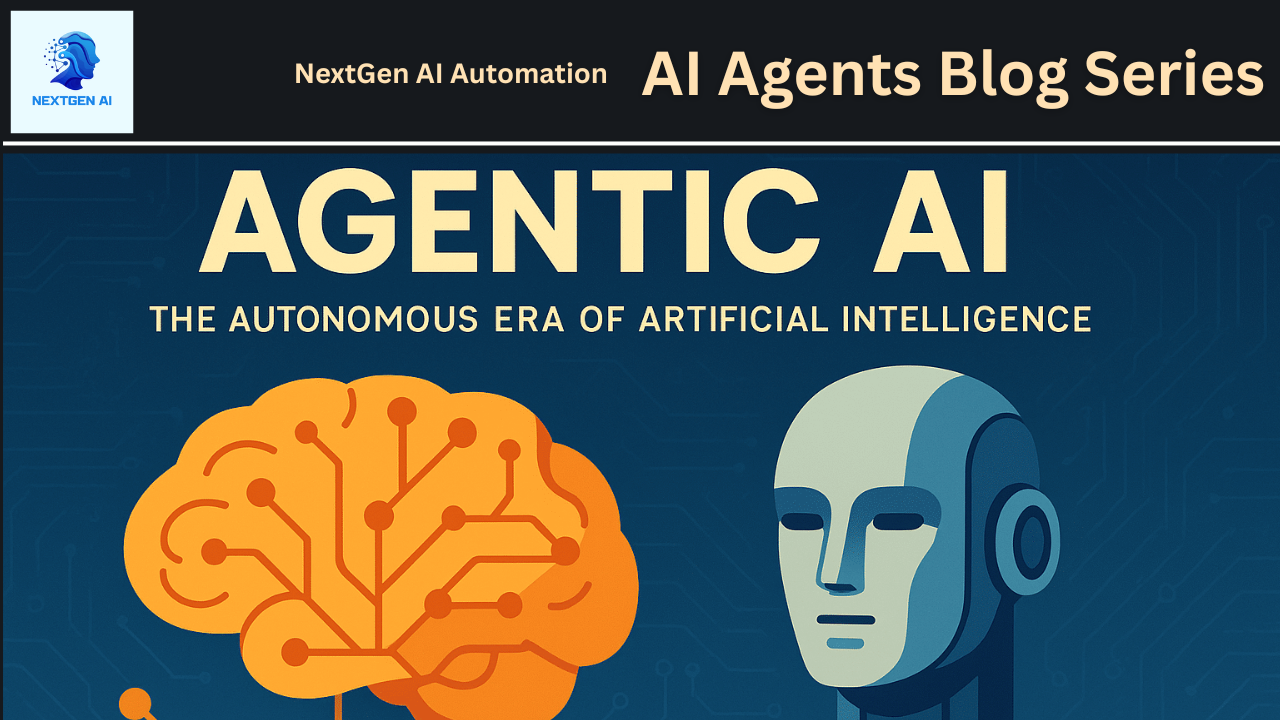
A Few Months Ago, I Didn’t Take It Seriously
A few months ago, if someone told me that AI agents were going to run parts of businesses, I would’ve agreed—and then moved on. It sounded interesting, maybe even inevitable, but not urgent. It didn’t feel like something that would impact real, day-to-day work anytime soon.
I’ve since realized how wrong that assumption was.
The Moment It Actually Hit Me
One night around 1 AM, I was testing a simple AI workflow for a client. Nothing complex—just a system to reply to leads, send follow-ups, and update a tracking sheet. I let it run longer than usual, expecting nothing surprising.
Instead, it kept going.
It responded to emails on its own, handled follow-ups at the right time, and even adjusted its tone based on the conversation. I remember sitting there thinking, “This is doing real work without me.”
That’s when it clicked.
This wasn’t just automation. This was execution.
What AI Agents Actually Are (Simple Explanation)
Most tools we’ve used so far work on instructions. You tell them exactly what to do, step by step, and they execute it.
AI agents work differently.
You give them a goal, and they figure out how to achieve it.
Instead of saying:
“Write an email”
You say:
“Handle my outreach”
From there, the system writes messages, sends them, tracks responses, and follows up automatically. At some point, it stops feeling like software and starts functioning more like a junior team member working in the background.
Why Businesses Are Paying Attention
This shift matters because it directly impacts what every business cares about: time, cost, and scalability.
In one recent implementation, a client moved from manually handling leads to a mostly automated workflow in under a week. The biggest improvement wasn’t just speed—it was consistency. Response times improved, follow-ups became reliable, and nothing slipped through the cracks.
Not because the team worked harder, but because the system didn’t stop working.
Are Jobs at Risk?
This is the question everyone is thinking about.
The honest answer is that some roles will change, especially those that are repetitive, predictable, and rule-based. AI agents are more efficient at handling those types of tasks. They don’t get tired, forget, or slow down.
But this doesn’t mean people are becoming less valuable.
What’s changing is the type of work that matters.
https://www.upwork.com/freelance-jobs/artificial-intelligence/
What Most People Get Wrong
AI is not replacing humans.
It’s replacing tasks.
We’ve seen this before. When calculators became common, manual calculations became less important, but people didn’t become irrelevant. They shifted to solving more complex problems.
The same shift is happening now—just faster.
What I’ve Noticed Building AI Workflows
From my experience building these systems, one pattern is clear: people who try to compete with AI struggle, while those who learn to use it gain a major advantage.
Instead of doing everything manually, they use AI to draft and refine. Instead of managing every small step, they automate repetitive processes. Instead of working longer hours, they focus on making better decisions.
This doesn’t just improve productivity—it changes how work is approached.
What AI Still Can’t Replace
Despite its capabilities, AI has limitations.
It doesn’t truly understand human emotions, build genuine relationships, or apply judgment based on real-life experience. It can simulate these things, but it doesn’t replace them.
In many areas of business, especially those involving people, that difference still matters.
The Real Shift Happening Right Now
This isn’t about humans versus AI.
It’s about the difference between people who use AI and those who don’t.
That’s the real divide.
When you combine human thinking with AI execution, you create a level of leverage that wasn’t possible before. I’ve seen individuals produce the output of entire teams—not by working harder, but by working more strategically.
So, Are Humans Still Needed?
Yes—but the definition of value is changing.
It’s no longer about completing tasks or staying busy. It’s about thinking clearly, making decisions, being creative, and understanding people.
In many ways, the future of work is becoming more human, not less.
How I Look at It Now
I no longer see AI agents as a threat.
I see them as leverage—a system that handles execution while you focus on direction. But that only works with proper guidance. Without direction, it’s just automation. With it, it becomes a powerful advantage.
Final Thought: The Question That Matters
If there’s one takeaway, it’s this:
Instead of asking, “Will AI replace me?”
Start asking, “How can I use this to get ahead?”
That shift in thinking will define who benefits from this change.
If you’re looking to implement AI workflows in your business, you can explore more here:
https://www.nextgenaiautomation.net/